To create art that is true and good demands a falling in love with Beauty, which becomes the true life, the movement, of the artist.
The Beauty-First Approach to Truth
Lent calls us to Beauty–the bright sadness that brings us to encounter Beauty Himself in the Holy Eucharist, in the people we love and serve around us; and it calls us who are artists to enter deeper into Beauty, to spread it out to the world in our work. It is when our understanding of art is contextualized in this way, in The Way, that art becomes the way, the movement, that we become saints.
One who has articulated Beauty as encounter is Dr Timothy Patitsas in his erudite work entitled “The Ethics of Beauty”(link).
A leitmotif throughout Ethics is the distinction between a Truth-first approach to the world and a Beauty-first approach.
In our left-brained world, we are always seeking the truth first. We want answers. We want to know everything. We now have Chat GPT to help us get the answers we want. We love our detective shows at night because at the end of a day of boring routine, complexity, and ambiguity, we want to watch something that brings us to a place of completion around what we can know.
Our world is obsessed with knowing things. The only other rival to detective or thriller shows on our streaming media is ER shows–again more getting to the bottom of things, more information, more quantification, deeper analysis. This is what the left-hemisphere wants: completion, knowledge, information, bureaucracy. And that is the world we have built and the one being built for us by more and more sophisticated machines.
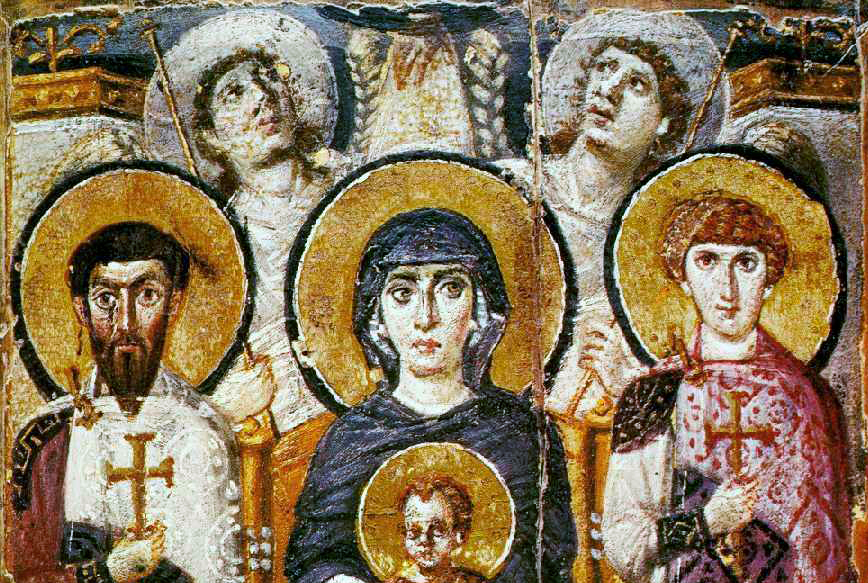
The Beauty-first approach is totally different. It enters complexity and finds patterns; it ditches literalism for liturgy; the altar holds its true place of prominence over the pulpit. Beauty-first is the place of miracles, of myrrh streaming icons, of symbol; Beauty-first is gob-smacking; it captivates us, enchants us, mystifies us, and it is the place where we encounter myth, legend, story.
Patitsas …
One of the mistakes of our using the truth-first approach is that this approach belongs properly to Christ. He is the Logos, the Truth, who consents to the Goodness of self-emptying, and thus shines out radiantly as Beauty. For Him, the progression is Truth-Goodness-Beauty.
We ought to respond to this in the reverse: when we behold this Beauty, we are born, and then strive to become Good by accepting to live self-sacrificially, and finally, with time, we manage to become True. We mirror His progression, in other words, which is what marks us as “good and faithful servants.” We ascend where He has ascended.
However, when you capture a form in art or architecture, both progressions are happening at once. You are going by your aesthetic feeling in response to the Beautiful Form, are adjusting and adjusting until what you make becomes good in the sense that it is faithfully and honestly bearing every force at work in your paintings; if you manage this you will have made a work of art that is true-i.e., that will last forever (The Ethics of Beauty).
Christ is the Way, the Truth, the Being, the One Who Is. He condescends to become man, and reveals Himself to us as Beauty and Goodness. We model that movement as an ascension. We move towards becoming more nd more like Him: We encounter Him as Beauty in the sacraments, in the natural world, in love, and we pursue Goodness, and become more and more True: truly alive, truly ourselves.
The Struggle for Beauty
And in the making of the work of art, this same progression takes place: a struggle for Beauty through iteration, an ordering of the one and the many, the ordering of chaos into pattern, into story. We create through iteration until we having something that is good, out of which emerges a work that is true art, that is good and beautiful and true.
And we ourselves become this work of art too, for the work of art we create is a microcosm of of the life of the artist–the artist as one who pursues Beauty, Goodness, and Truth in his or her own life. Man as a microcosm of the cosmos and God Himself.
Patitsas continues on this dual progression of ascension and descension …
But while you, the artist, are making these adjustments guided by your aesthetic sense, at the very same time, from the other direction, The Form, The Truth–Christ–is condescending to shoulder more and more of the forces of chaos to present in the particular artwork you are creating. That is, He is doing more and more Good in that work of art or building. Until when the artist has allowed the form to be completely Good, the true building or painting at last radiantly appears and in it and Christ shines out as the Beautiful (Ethics of Beauty).
This is synergy: the energy of God fusing with the struggle of the artist–the struggle of Beauty, Goodness, Truth in his or her own life; the Eucharistic indwelling of the Uncreated Logos as union with God so that He becomes the creative force in and through the artist–that same life force, that same uncreated energy that is alive in all of creation. This synergistic loving union becomes the act of what Tolkien aptly calls “sub creation with God”, and, in turn, God transforms our own lives into works of art.
Patitsas …
So even as the artist proceeds in one direction, he or she is mystically met by Christ, rushing to meet him from the other direction, rewarding the prodigal return.
This is the sacramental life of the artist: loving union with God through our own bankruptcy, the realization of our total futility, indeed our non-existence, our non-being outside of Christ. Our artistic work should be an ontological struggle to meet Christ and allow Him to shape us to become the clay in the hands of God, allowing Him to shape us into the artist that we are; not by our will or our merit, or even our talents, but only by His grace. The other way, the way of the ego, is death …
But if the artists tries to “be creative” in some false egoistical, ex nihilo, and truth-first say, or if at the other extreme the artist looks firstly to a pre-existing blue print of Beauty which he intends to impose upon the world, then things won’t turn out so well. Rather, he must be “stupidly” guided by his feelings for Beauty, or the building or painting won’t come alive (Ethics of Beauty).
Falling in Love with Beauty
I’ve written about this before(link), this egoistical way of ‘art’ that seeks to take the place of God and create ex nihilism, which is impossible and absurd. The Way, the Logos, , and this following and uniting with the Way is more like a chiasm, “for as God descends, we ascend, in a union that is also an exchange of places” (Ethics, 462).
And …
The reality of all this is so beautiful and sublime: it is not by seeking to create a beautiful image but by falling wholly in love with Beauty that we ourselves become Beautiful. In this, what we do and make discloses both God’s and our own Beauty to the world. By forgetting the world and ourselves, we help to save the world–and we ourselves (or our art) become immortal (Ethics, 462).
Thus our true work is to seek and fall in love with Beauty Himself–that’s the direction, that’s the struggle. The rest becomes an outflow of that struggle. For the real work of art is ourselves. But we can’t do it on our own, for apart from Him we do not exist. Instead we must gorget ourselves and focus on Him by loving others and loving His creation, and partaking eucharistically of His Beauty.
