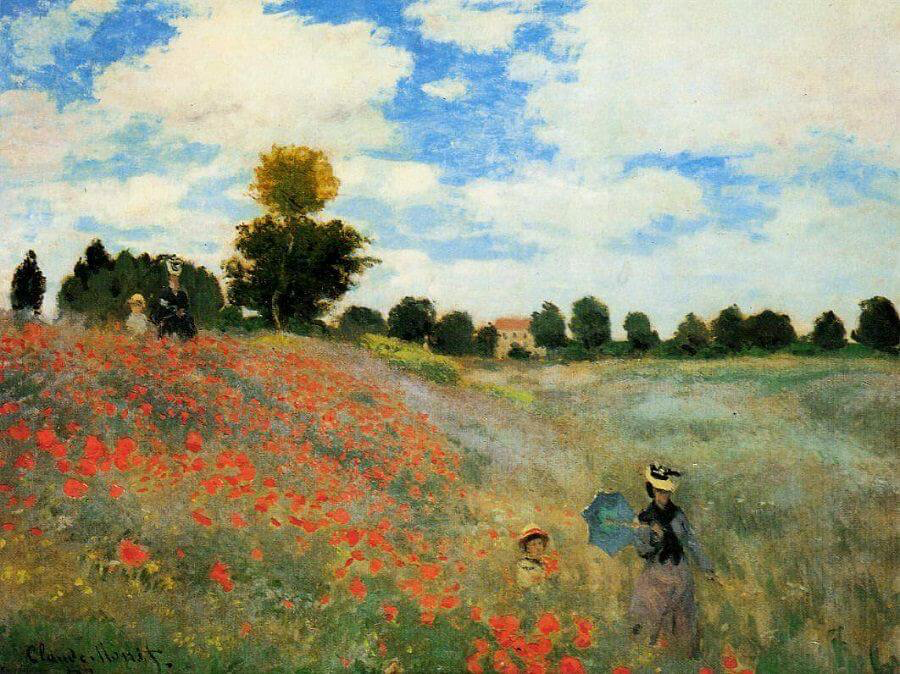
In our obsession with speed, Art calls us to something different–stillness, solitude, Beauty as a way of being that takes its time and is present.
More Than Just Speed and Content …
It’s been a long long time since my last blog post–and that’s just the point about this blog post … here’s what I mean.
Is it just me or is there a crazy pressure to put ‘content’ out, whether blogs or books or podcasts? … And now with AI it’s become even crazier where pumping out content at blistering speeds is the norm. In the words of Paul Virilio,
As I have said many times before, the speed of light does not merely transform the world, it becomes the world.
Speed becomes the world. Speed is the source of progress and wealth. We’re obsessed with it. It’s why I can’t sit at a light for a minute without wondering why I didn’t take that side street shortcut to avoid it.
It’s why there’s all this madness about ‘creating content’–content …. what a stupid word for something one is supposedly creating. Content is what people don’t create, but rather rapidly spew out to fill something: an obligation, a demand, a mandate, an order … Trust me I know, because I do it too.
Would you agree with me that Art is something different, or at least should be?
Just Being
I was doing some consulting work in Paraguay over the summer. One afternoon, I took a little break and walked outside and just stared out at the world around me, that beautiful, rich, sunlit Paraguayan world. I stood in the shade of some trees and just looked around at trees and flowers and birds. I looked up at the sky and, stepping out of the shade, felt the sun warm my face and its brightness pull on my eyelids. I breathed in the air, the aroma of budding Paraguayan spring, and realized that for the first time during my stay there I was actually present for myself and the world around me–I was ‘presencing’.
And I realized while standing there doing nothing at all ‘productive’–not checking my phone, or looking at emails, or taking photographs, or thinking about work–that this is what it means to live poetically.
A friend of mine came out and joined me and we talked about what it means to create.
He said, “This is what creativity needs, Jeff … It needs this kind of time to do nothing but be in the moment, in nature.”
“I agree: I think of Rodin and Monet and so many other artists and writers who spent hours upon hours just sitting in nature. They didn’t have our devices; they didn’t have artificial intelligence. They sat and engaged the world.”
“They even got bored,” he continued. “They weren’t trying to fill every minute of the day with meetings and emails and action. They spent many hours just being.”
“And,” I added, “they weren’t pumping out ‘content’ and podcasts and blog posts every day and X posts to satisfy algorithms. They created what was on their heart to create, even if it took a long long time and they didn’t know when they would reach the end.
The Singing Heart
Ivan Ilyin in his book The Singing Heart wrote and thought about writing, about creating, in this very spirit …
After having lived, loved, suffered, and enjoyed, observed, thought, and desired, hoped and despaired, the desire grows in a person to impart all this to us, as something that is important for us all, that is imperative to see spiritually, experience, muse over, and make our own: in other words, as something meaningful about something important and precious. And so he begins to seek out true images, brightly profound thoughts, and precise words. …
And then he adds something that in this 21st century, in the world of AI, in an age dominated by the “politics of speed” (Virilio) is sacrilege …
A responsible writer nurtures his book for a long time: for years, and sometimes his entire life; he doesn’t part with it night or day; he gives it his best strength, his inspired hours; he agonizes over its theme and then finds healing through writing it. He searches for truth, beauty, ‘precision’, a true style, a true rhythm, all to be able to impart, without distorting them, the visions of his heart (The Singing Heart, 14).
I’ve been working on a book on St Patrick. When I looked at the last draft that I’ve been putting into a ‘semi-final’ draft, I can’t believe that I had completed that draft several years ago, and the one before that another year or so prior. … I want to rush to finish it, and then I get down on myself and I stop writing.
Months go by …
Then I open my email one day and it’s a note from a friend, a poet, who for some reason–a gift from St Patrick and St Paisios–is telling me all about a poem he finished that he had been writing for 36 years! He doesn’t know my struggle to fit into this world of speed, to create content that always feels so cheap and dirty … He doesn’t know that his words, his celebration of a poem completed after thirty-six years, is a gift to me of grand proportions; that it made my eyes fill with tears and affirmed my struggle in the biggest way possible. Again, a gift from St Patrick and St Paisios. And that poem of thirty-six years–he sent me a copy–is of such richness and depth and beauty I have to put it down after a while because it’s all too much to take in at one time.
He, the poet, said, “Jeff: writing takes a long time. Don’t rush it. Work on it for a while, then put it away for a while. And when you’re not at your job, and you’re not with your family, and you’re not struggling to write, then you need to sleep, to rest …
I take consolation in this as I emerge again to this blog after many months away; as I emerge to writing after many months of not writing; as I continue through a book that is changing me and those changes are somehow writing over what I had written previously.
The Cathedral of the Self
It’s the winter Olympics 2026 in Milan, and the image that appears on TV is of the Duomo in Milan. I visited there once and was told that the cathedral was built over hundreds of years and over generations of workers. And in fact, you can see all the different architectural styles represented from the bottom to the top of the cathedral, because it changed as it was being built over those centuries.
This is how I feel about creating: it comes slowly over time and it changes you and you change it, until the work represents not you at a particularly point in time, but over many points, many seasons, many long periods of not writing at all–the “lived, loved, suffered, and enjoyed …”
If you’re in the same spot; if you hate AI so much and feel sorry for yourself for not succumbing to it and for being an idiot that isn’t creating enough content, and yet feel sorry for the poor folk who are addicted to its speed and its endless string of words that cascade down the screen like a zeros-and-ones waterfall, then I pray that you find yourself in the stillness, in the silence, in those moments when you are away from your phone long enough to feel the sunlight pulling on your eyelids, and watch a squirrel clambering through a tree, and can hear the flap of crow’s wings …
For the politics of speed can only be conquered through such an act of stillness.
